




marcelinogerke
marcelinogerke
The Edward Jones Gold IRA: A Theoretical Exploration of Precious Metals In Retirement Planning
The idea of a Gold Individual Retirement Account (IRA) sits on the intersection of traditional monetary planning and the enduring allure of precious metals. In a theoretical sense, a Gold IRA marries the familiar tax-advantaged construction of retirement savings with the perceived retailer of value supplied by bodily gold. After we place Edward Jones in this imagined scenario, we can examine not only the mechanics of such an offering but additionally the broader implications for fiduciary duty, client schooling, threat management, and strategic asset allocation. This text goals to outline a rigorous, hypothetical framework for understanding what a Gold IRA would entail within an Edward Jones–style advisory model, highlighting the opportunities, constraints, and basic questions that might come up.
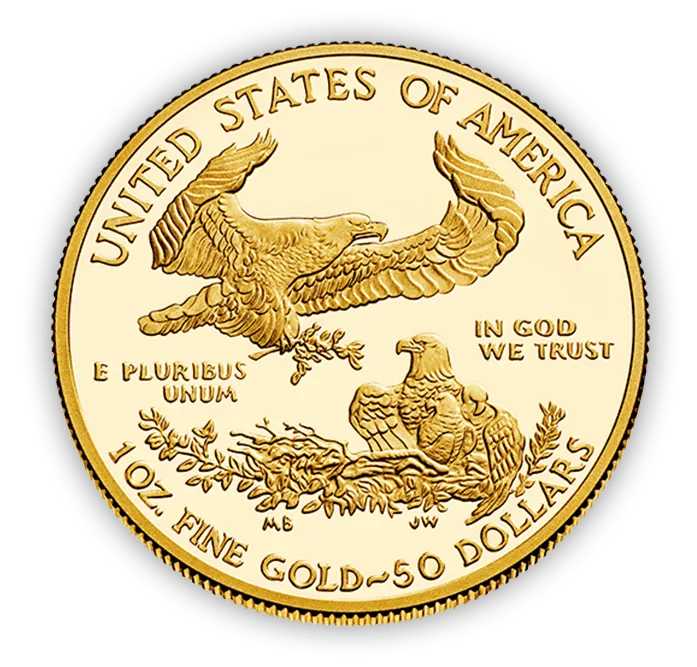
First, it is important to define the instrument in query. A Gold IRA refers to an individual Retirement Account that holds physical gold or gold-associated investments rather than conventional paper property corresponding to stocks or bonds. In apply, many so-known as Gold IRAs are self-directed accounts that require the account holder to work with a specialised custodian and Tamilachat a segregated depository to store the metal securely. The function of the advisor—under a protocol that resembles Edward Jones’ client-centric, fiduciary approach—would be to help shoppers perceive how a gold allocation may fit into a broader retirement plan, evaluate danger-adjusted expectations, and coordinate with custodians to ensure compliance with IRS rules.
From a theoretical vantage point, a number of structural concerns would outline how a Gold IRA could possibly be supplied underneath an Edward Jones framework. First, the advisor would not typically take physical possession of gold or straight custody assets. As a substitute, the consumer would establish or convert a standard or Roth IRA right into a self-directed format with a licensed custodian capable of handling precious metals. Edward Jones would provide investment steerage, danger evaluation, and portfolio building advice, whereas the custodian would handle the mechanics—procurement of IRS-authorized bullion, verification of fineness, storage in an insured depository, and reporting for tax purposes. The shopper-advisor relationship would thus resemble a layered architecture: fiduciary oversight and planning at Edward Jones, custody and storage execution at a 3rd-celebration specialist, and IRS compliance dealt with by the custodian.
The theoretical appeal of a Gold IRA rests on a number of premises. Gold is traditionally considered as a hedge in opposition to fiat foreign money devaluation and inflation, and as a diversifier with low-to-average correlation to equities and bonds. In a diversified retirement portfolio, a modest allocation to bodily gold may doubtlessly dampen volatility during systemic shocks or currency crises. Moreover, gold’s independence from company earnings and interest-price cycles gives a non-traditional ballast that might complement a long-time period equity tilt. A hypothetical Edward Jones framework would stress the alignment of any Gold IRA inside an general danger finances, the investor’s time horizon, and the liquidity wants of retirement-age cash flows.
Yet the theoretical benefits include significant caveats that should be addressed head-on. One of the central points is liquidity. Gold, even in an IRA wrapper, is comparatively illiquid relative to money equivalents or widely traded stocks. Whereas the existence of an energetic seller network and insured depositories helps, promoting gold to meet required minimum distributions (RMDs) or to rebalance a portfolio at a moment of stress could incur bid-ask spreads, vendor fees, and timing threat. The optimal usage, in principle, could be a modest publicity that serves as a complement to, not a alternative for, traditional assets would be prudent. In an Edward Jones–style advisory course of, this means precisely defining position and expectations: what percentage of the retirement account is allocated to gold, beneath what market circumstances would rebalancing occur, and the way the gold position interacts with other holdings in a tax-environment friendly method.
Price construction is one other theoretical pillar. Gold IRAs usually entail multiple layers of charges: the custodian’s annual maintenance charge, storage and insurance coverage charges at the depository, potential markup on the acquisition of bodily steel, and selling prices at liquidation. There can be prices related to compliance reporting and the ongoing valuation of belongings held within the IRA. In a fiduciary advisory relationship, these costs have to be clear, justified by the incremental value delivered, and commensurate with the client’s total price arrangement. Edward Jones, with its emphasis on transparent pricing and fiduciary duty, would doubtless emphasize full disclosure of all costs and an explicit demonstration of how the Gold IRA contributes to the client’s retirement objectives relative to lower-cost options like gold ETFs or different hedging automobiles.
Regulatory and tax considerations form the backbone of any theoretical evaluation. The IRS permits sure types of physical precious metals to be held within self-directed IRAs, but strict rules govern eligibility, storage, and reporting. Coins and bars must meet minimum fineness standards, and storage must occur in an IRS-accepted depository. Distributions from a Gold IRA are topic to common income tax, and early withdrawals are usually subject to penalties, with extra IRA distribution rules making use of as one ages. For Edward Jones planners, this translates into robust shopper schooling concerning the tax implications, distribution planning, and the lengthy-term influence of required distributions on money circulation. A nicely-constructed theoretical mannequin would include scenario analyses showing how inflation, interest rates, and tax policy shifts could have an effect on after-tax returns of a Gold IRA relative to different retirement methods.
From a portfolio design perspective, the theoretical integration of a Gold IRA requires cautious calibration. The Edward Jones framework would possible advocate for a disciplined diversification strategy somewhat than an “all-in” gold thesis. An investor with 40 or 50 years to retirement would possibly profit from a strategic call at a lower baseline allocation to physical gold, whereas a extra conservative savant nearing retirement could adopt a smaller allocation to scale back volatility and preserve liquidity for near-time period needs. The advisor would also consider different valuable metals exposures, corresponding to mining stocks or exchange-traded merchandise, as completely different risk-and-return profiles that can be accessed inside or alongside an IRA depending on the client’s preferences and tax state of affairs. The central theoretical question just isn’t whether or not gold needs to be included, however how a Gold IRA suits into a coherent, proof-based plan that continues to be flexible within the face of evolving macro circumstances.
An important theoretical tension revolves around belief and operational threat. The idealized Edward Jones process would emphasize rigorous due diligence on the custodian, the depository’s insurance coverage, and the provenance of the metal. Purchasers must be confident that their bodily assets are secure, properly insured, and accurately valued. This means unbiased verification, clear reporting, and a effectively-documented governance framework that aligns the client’s pursuits with the advisor’s fiduciary duties. Any theoretical model should handle potential conflicts of curiosity, ensure that recommendations are evidence-based mostly, and keep away from steering purchasers towards products that generate increased commissions with out commensurate value.
Finally, a ahead-looking perspective invitations a considerate discussion about the position of gold in retirement planning amid altering financial landscapes. Theoretical analyses typically emphasize the importance of scenario planning: what if monetary coverage turns into permanently extra accommodative? What if geopolitical risks escalate? In such contexts, a Gold IRA might serve as a non-correlated asset class that complements equities and fixed revenue. Nonetheless, the prudential conclusion is to not depend on gold as a guarantee of wealth preservation. Quite, it must be considered throughout the broader architecture of risk management, liquidity planning, and tax-conscious investing that a reliable advisory practice—such as the hypothetical Edward Jones framework—strives to ship.
In sum, a theoretical interpretation of an Edward Jones Gold IRA highlights the enduring tension between protection and practicality. Gold can supply diversification and a potential hedge against systemic threat, however it introduces complexity, price, and liquidity issues that require disciplined governance, transparent disclosures, and rigorous client schooling. A successful implementation rests on clear alignment with retirement objectives, careful number of custodians and depositories, and an integrated plan that treats the Gold IRA as one instrument amongst many in a diversified, tax-efficient path to and via retirement. Whereas this exploration is theoretical, its core message is relevant to any modern advisory apply: new asset courses have to be evaluated not in isolation, however as parts of a holistic, shopper-centered technique that honors fiduciary obligation, prioritizes transparency, and remains adaptable to the unpredictable currents of the monetary world.